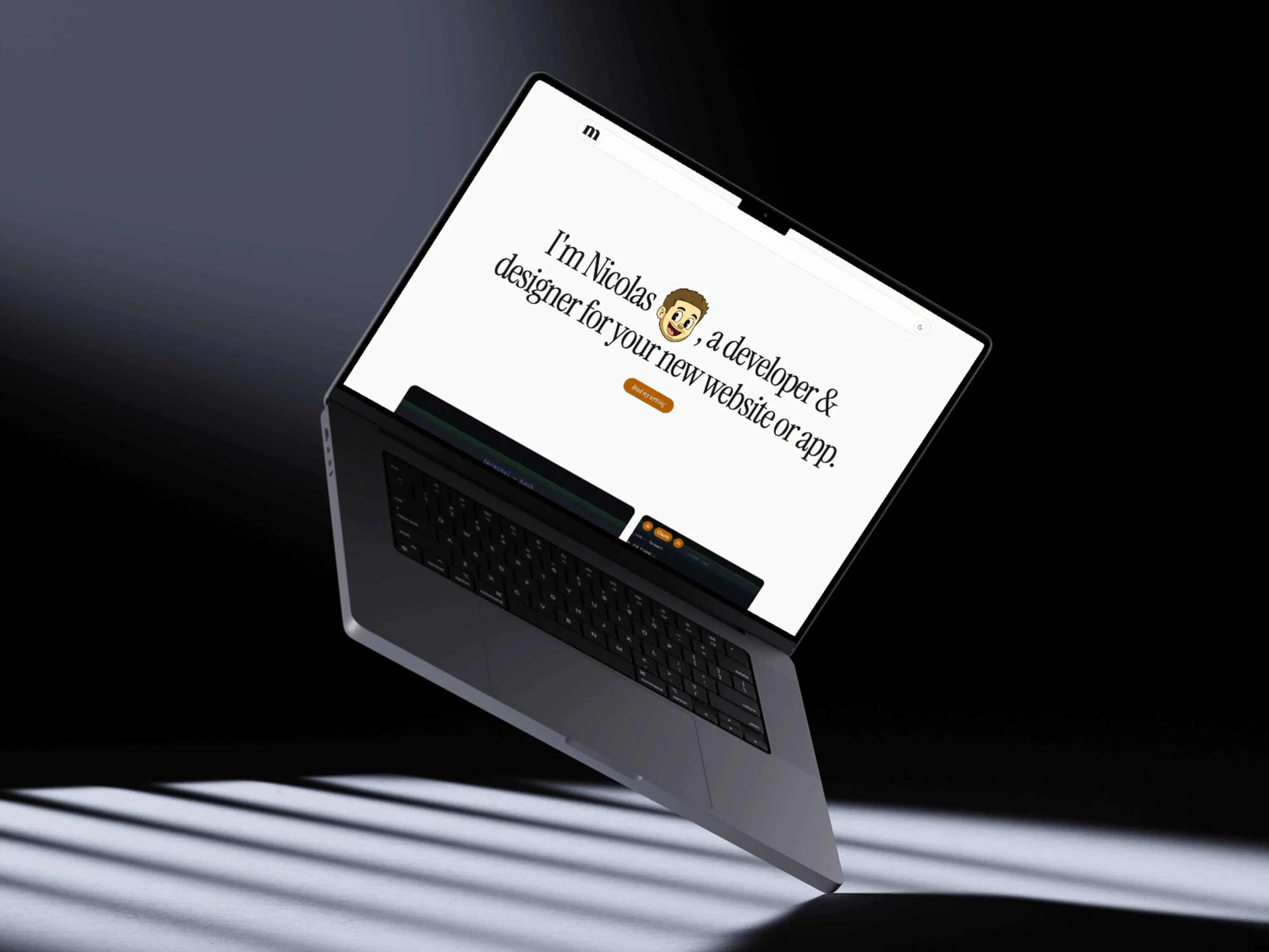
How I built my blog, from start to finish
Three years. That’s how long it took me to finally build my blog. I’ve always wanted to share my knowledge, my findings, my opinions about development, and so much more. But after a full day of work, I never started building. That all changed when I started working more and more with AI. Just a few nights with Claude made fiction into reality! I want to have a deep dive to inspire fellow developers who have been in this situation before.
Why build it yourself?
I’m a developer. Ofcourse I believe that I can build my own blog the best. I don’t like most prebuilt solutions. I did not want to pay for any sort of hosting, yet I did want to use some sort of framework (in this case, it turned out that Astro was the best fit). I didn’t want any back-end either. It’s a hobby project for me, so I want to be able to tinker myself. But as it’s publicly available, I also didn’t want to worry about security.
There are countless solutions available. Because this was done after working hours, I didn’t have any energy to go in depth with all these tools / frameworks. That’s when I turned to Claude and started planning the solution for my own blog. After laying out what I wanted in detail and a few questions later, Claude suggested to build it with Astro.
I hate PowerPoint
You might ask yourself, why do you refer to PowerPoint all of a sudden? Well, the blog wasn’t my only requirement. I also want to be able to turn articles into presentations. And I also knew that it had to be a monorepo. So you might see why my focus was already on building it myself from the beginning.
In a future article which I’ll link to here, I will go more in depth on how I prepare presentations with the assistance of this project. Reminder for future me (probably AI) to link this article.
Just get started
A common pitfall most developers have is premature optimizations. Instead of starting and pushing out content, I was too busy all these extra nice to haves that I don’t need. Well, at least not from the start of the project.
I started planning out the technical requirements of my blog with Claude. This was straightforward, and it also helped me to focus on the MVP while Claude kept on asking questions about the project. It helped me focus on what’s important to get my project live. The planning took up most of my time for this. But because the plan was solid, the execution of it was nearly flawless. I had a first version of my website from my three-year-old design ready in no time.
Guy KawasakiThe hardest thing about getting started, is getting started.
The Plan
The first plan I created was the foundation of the project. It contained the entire tech stack, references to my design, initial pages that I needed and that was it. After the plan was solid, Claude started implementing the plan. Within minutes, I saw my blog coming to life. At last.
The Execution
For the first time, I let AI handle all the coding. I know, there are in the meantime plenty of articles, videos, etc. about other people vibe coding more than a website. But for me, this was the first time letting AI handle everything. I also didn’t care a lot at that time about code quality, all I wanted was to have my blog. In just a matter of minutes, I did. Not 100% the way I wanted it, but it was “good enough”.
The Result
At first, it was good enough, but the more I looked at it, I still felt like my blog missed some essentials. For instance, a table of contents. That’s not the AI’s fault because, I did not specify it in my plan AND it was not included in any of my old designs either. What would’ve taken 30 min in the past, was now added in a matter of minutes. I prompted my general idea of things I wanted. And boom, I had my table of contents!
What I learned from this is that you can really start focusing for everything in MVP style. Whenever you have another idea or two, it’s just as easy as making a few solid prompts to try it out. That’s always been a mistake of mine with side projects.
What if…?
That’s a question which is more fun than ever to ask! “What if on mobile, I tracked the amount of progress with a percentage and a circle indicator?”, “What if I want to track how many users visited my blog, but not with Google Analytics?”, … . There were many more of these types of questions. You can really push your own boundaries if you start realizing that AI isn’t here to replace you, it’s here to push ourselves.
Oh, and for those who are wondering about the analytics part of my website, I will write an article about that as well in the future.
For the future
I mentioned that I’ve changed my AI workflow since making this blog after following Matt Pocock’s course. Now my flow starts by generating a PRD. This contains much more detailed information about what I want to achieve. The skill always returns a structured document that I can review. The structure of the document is also always the same which helps to review the output. It gives me enough confidence whenever I work with AI that the output will be as I requested.
All of his skills are free for you to grab, so you can experiment with them in your own workflow. Yet I highly recommend following his cohort to get a good grasp on how to use his skills properly.
These skills are designed to be small, easy to adapt, and composable. They work with any model. They're based on decades of engineering experience. Hack around with them. Make them your own. Enjoy.